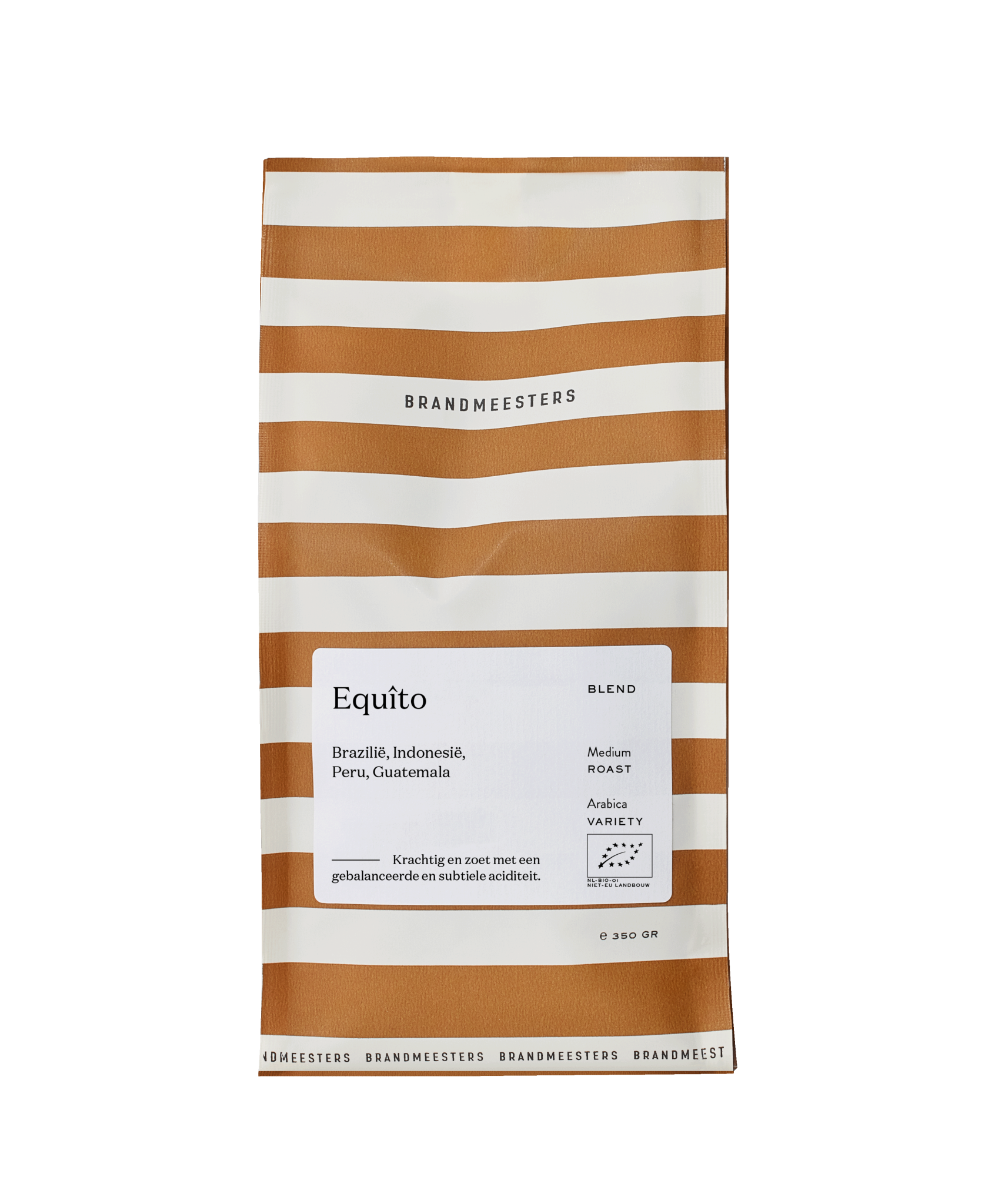
About this coffee
ORIGIN
Peru – Aprocassi Decaf beans
The Aprocassi-cooperative was founded in 1999 by a group of small coffee growers in San Ignacio. Today, the cooperative has 634 members managing a total of 1,535 hectares of farmland.
Due to its remote location and the small scale of the farms, producers are often dependent on intermediaries or cooperatives to get their coffee onto the market. Membership in a cooperative provides farmers substantial protection against exploitation and can make a significant difference in their income from coffee. Currently, only about 15-25% of small farmers are members of a cooperative.
Sugarcane decaffeination uses ethylacetoacetate (EA), a naturally occurring substance. In this case, the EA is extracted from molasses, a byproduct of the sugar production process. The process is relatively simple: the coffee beans are moistened with water, after which the EA circulates through the beans. The EA binds to the caffeine in the bean and extracts it, while most of the flavor compounds are retained. Once the desired caffeine content is achieved, the remaining EA is removed from the beans by steaming them.
Thus, we roast this coffee!
A perfect espresso recipe is dependent on many factors: the machine, mill, water, filter, beans, etc. In our bar in The Hague, we usually start with this recipe:
19 grams of coffee for a 45 gram espresso (double shot).
We start with a flow time of 25 seconds.