About this coffee
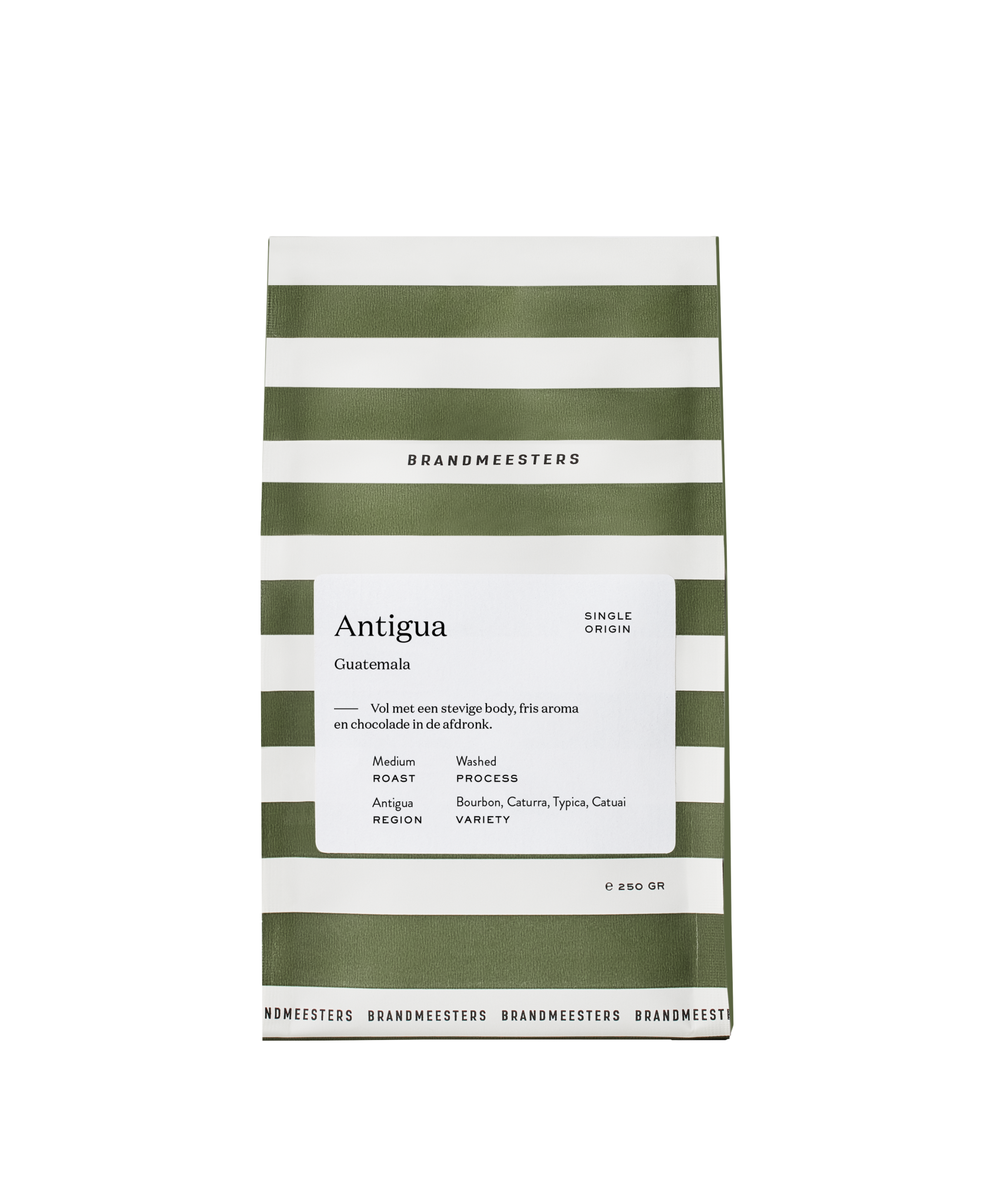
Guatemala Gesha – Finca Palestina, Acatenango
Taste Description:
This Gesha coffee is mild and fruity. The aroma is floral (lavender) with notes of sweet citrus, such as candied apple skin. In the taste, a clear, juicy fruityness comes to the fore, reminiscent of a grapefruit. Subtle hints of chocolate are also present. The mouthfeel is velvety and gentle. The finish is long and clean, with a sweet hint of caramel-fudge.
Due to its fruity and delicate character, this coffee is lightly roasted and excellently suited for filter brewing.
Specifications:
Plantation: Finca Palestina
Country: Guatemala
Region: Acatenango
Province: Chimaltenango
Village: Aldea El Socorro
Varieties: Gesha
Altitude: 1,540 meters above sea level
Area: 45 hectares + 21 hectares natural ground
Coffee Processing
The Gesha grows on two different sites on Finca Palestina. One grows on a shady spot with many pink cedar trees, while the other gets between 10:00 AM and 15:00 PM sun and is under Grevillea and Chalumbra trees. Harvest takes place late in the season around January, when the berries are around 23 to 25 brix (sugar content). The coffee plants that grow most in shade are the most pronounced in complexity and taste. Joel chooses a natural processing method, which allows the taste to come to its full expression he says. They pick the entire ripe berries, which undergo several fermentation stages in the flesh of the berry before drying for 30 days on beds. The time between picking until this process is complete is around 40 days. During this time, the berries receive a controlled amount of sun and wind, with great attention to weather conditions. During the day it is very hot and in the evenings it can be quite fresh between the mountains, which provides the delicate profile that makes this coffee so unique.
The story of Finca Palestina
Finca Palestina belongs to the Perez family, consisting of Joel and his wife Karla. Caleb, their son, thinks it will be his father's successor in the future. The farm has been in the family since 1958, and Joel took over his father's work in 2012, when the coffee rust problem in Guatemala reduced the harvest to just 5% of the original yield. Joel, who had gained experience in Effective Microorganisms for his own farm in Peten, also used EM to improve the soil at Finca Palestina, which provided an extremely healthy soil for Finca Palestina.
What makes Finca Palestina unique is its proximity to two volcanoes, La Horqueta (as they are commonly known). Volcano Acatenango is sleeping, but Volcano Fuego is almost constantly active, which provides spectacular views from the farm. The ground is therefore extremely fertile and continuously replenished with various minerals. There is a thin layer of Fuego ash on the coffee leaves.
The pickers are largely part of several generations involved with the farm since a few years ago, the workforce is mostly from Viudas Blancas*.
*Viuda Blanca refers to a woman whose husband has moved to the United States (often without papers, without a fixed return date, sometimes without contact) and is no longer reachable. These women find themselves in an economic and social isolation.
The foundation for good coffee is a healthy soil
The aim of making the soil as healthy as possible ensures that Joel works as much as possible in harmony with nature. His method is a mix of permaculture, agroforestry, and regenerative farming. Joel is trained as a mechanic and approaches the challenges that arise on the farm in the same way. For example, the top layer of the farm is the most nutrient-rich part, but during the rainy season always washes away a bit of this rich soil. Joel brings this soil back to the central point on the plantation and mixes it with compost, EM, and uses it for his plants.
That the soil is healthy can be seen in the thick humus layer and the amount of good fungi in the soil. At several places on the farm last summer, new plants were planted on areas where there were older ones. The terraces are then neatly made, and by turning on the steep slopes, one can see a layer of sometimes up to 20 centimeters of healthy white fungi. This layer brings the nutrients to the right place and holds an incredibly large amount of water.
Collaboration with nature
Finca Palestina is a green oasis in the highlands, with a great diversity of plants and animals. In addition to the coffee plantation, Joel also manages 21 hectares of protected nature that is integrated with the farm. According to a recent report, there are 11 unique amphibians here, and a type of oak grows only in this part of the world.